Endurance
Use manageable effort, repeatable routes, and enough variation to keep the practice relevant. Conversation and breathing can be useful descriptions alongside a device display.
A training guide for men over 35 should account for work, sleep, weather, history, and the simple fact that energy changes. The framework below is adaptable rather than prescriptive.
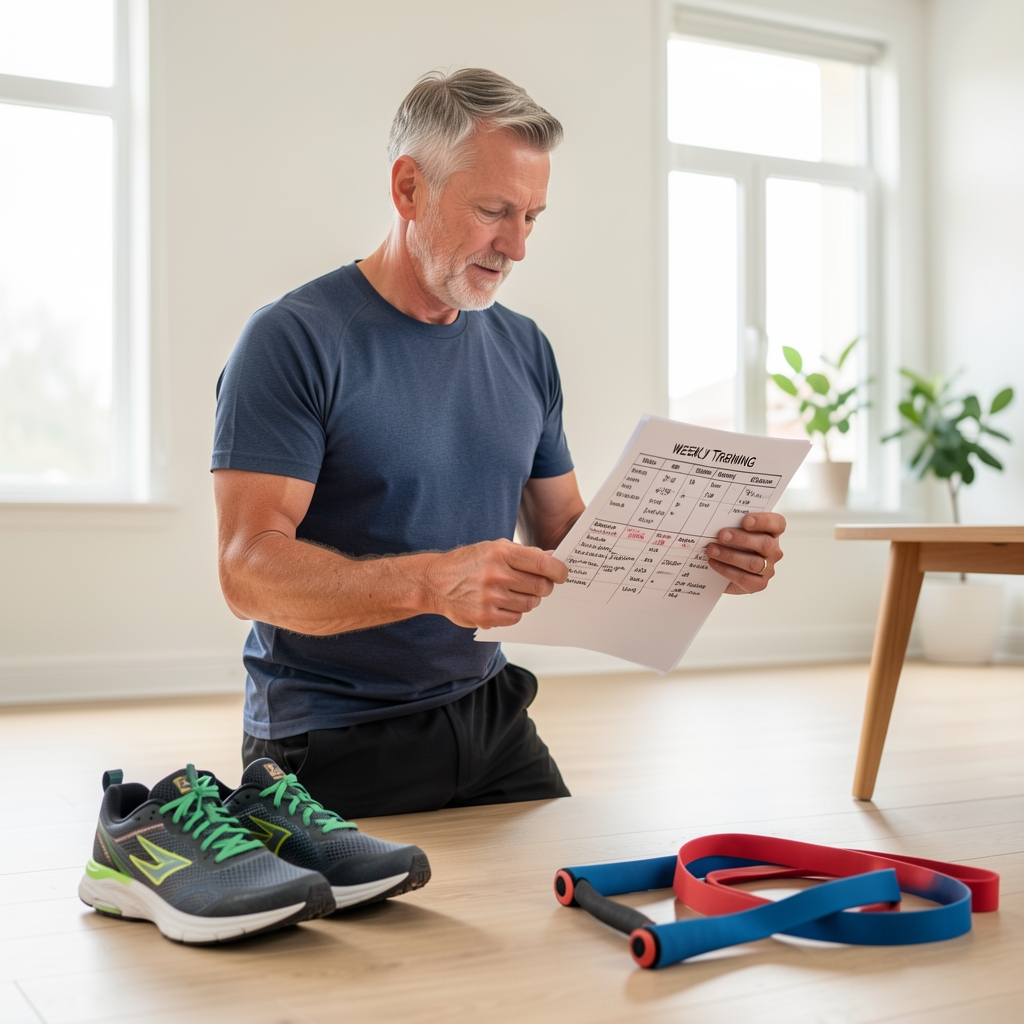
A useful plan begins by naming the time and attention that are genuinely available. A reader may have two short windows, three longer windows, or an unpredictable schedule. Each arrangement can support a thoughtful practice when the plan distinguishes essential work from optional work. The aim is not to fill every day; it is to make the next sensible session visible.
The most durable plan is the one that still makes sense when the week becomes ordinary.
| Context | Useful emphasis | Possible adjustment |
|---|---|---|
| Familiar energy and time | Planned session with normal pacing | Keep the original duration and review afterwards |
| Short time window | One clear movement quality | Reduce volume rather than rushing every part |
| Busy or poorly rested day | Easy movement and technique | Choose a walk, mobility sequence, or rest |
| Unusual response | Observation and support | Pause, record context, and ask an appropriate professional |
Use manageable effort, repeatable routes, and enough variation to keep the practice relevant. Conversation and breathing can be useful descriptions alongside a device display.
Choose movements that connect to real tasks and allow stable technique. Progress can involve control, range, confidence, or consistency rather than only adding load.
Use controlled movement to prepare for a session or to explore a range that feels appropriate. Mobility work should remain connected to the movement you intend to use.
Record current routines without attempting to improve everything at once.
Choose one priority and define what a manageable session feels like.
Use similar conditions long enough to understand the response.
Change one variable, such as duration, route, or rest between efforts.
Place the priority alongside ordinary work, travel, and social commitments.
Keep what remains useful, revise what creates friction, and seek guidance for unresolved questions.
Navlin’s guide provides information, not an individual training prescription. Contact Navlin at Jalan Sudirman No. 18, Senayan, South Jakarta 12190, Indonesia, or +62 21 7123 8945 for editorial questions.
A plan should be reviewed against the week that actually happened, not the imagined week that was written down. Note which sessions were completed, shortened, moved, or skipped, and record the reason without judgement. This creates a practical map of friction. A route that requires too much travel, a session placed after a demanding shift, or a progression that feels unclear can all be adjusted without abandoning the wider intention.
Progressive thinking does not require constant addition. It can mean improving coordination, making a familiar session more comfortable, learning how to pace an effort, or organising rest with less uncertainty. Navlin uses conservative language because individual responses vary and a general guide cannot decide the right change for every person.