1. Prepare
Choose a modest question, such as whether a familiar pace feels manageable after a busy week. Avoid changing duration, terrain, shoes, and intensity at the same time. A narrow question creates a cleaner observation.
Use simple observations to understand readiness and change, not to manufacture certainty. A useful assessment is a short conversation with the day, not a verdict about the person doing the work.
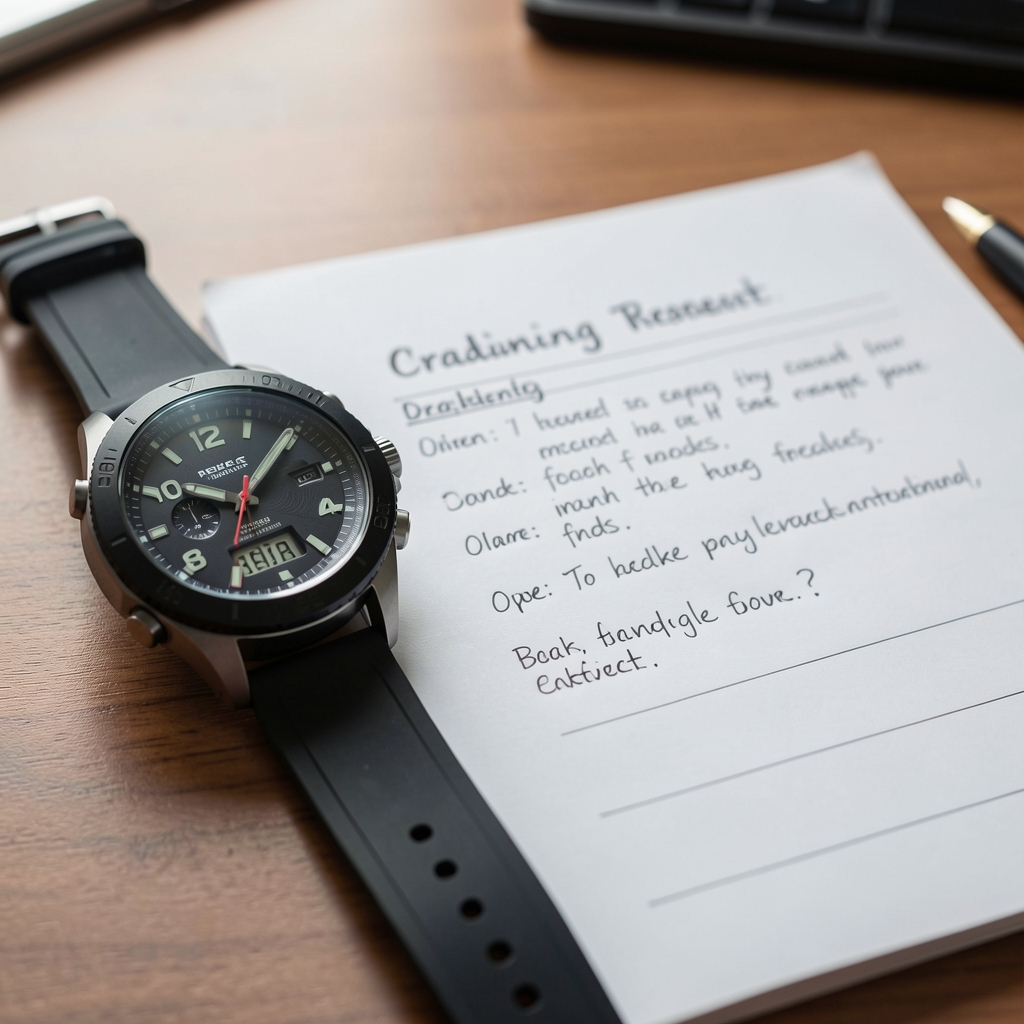
Assessment works best when it stays close to ordinary experience. Before a session, note sleep, time available, weather, route, and the reason for training. During the session, notice breathing, coordination, pace, and whether the effort feels familiar. Afterwards, record what changed and how the next morning felt. This creates useful context without turning every workout into a test.
Good assessment makes the next decision quieter and more specific.
The table below is a practical editorial framework. It is not a diagnostic tool. Its purpose is to help a reader describe a session accurately before deciding whether the next session should be similar, lighter, or postponed.
| Area | Useful question | Record |
|---|---|---|
| Breathing | Could you speak in short phrases? | Easy, controlled, interrupted, or unusual |
| Movement | Did technique remain familiar as effort rose? | Stable, altered, or needing a pause |
| Recovery | How did you feel later that day and next morning? | Normal routine, slower start, or persistent change |
| Context | What outside factor may have shaped the session? | Sleep, heat, travel, work, food, or terrain |

A watch can display pace, heart rate, distance, and time, but the display does not explain every change. A humid morning can alter perceived effort. A poor night of sleep can make a familiar route feel demanding. A new strap, software update, or loose fit can also change the reading. Compare like with like where possible, and write down conditions that make comparison less useful.
Trend notes should remain proportionate. One slower session is information, not a character judgement. Several sessions with the same unexpected pattern deserve a pause and a more careful question. If a device reading conflicts with how you feel, do not force the body to match the screen; step back, check the context, and seek appropriate guidance when needed.
Choose a modest question, such as whether a familiar pace feels manageable after a busy week. Avoid changing duration, terrain, shoes, and intensity at the same time. A narrow question creates a cleaner observation.
Use plain language while the experience is fresh. Note breathing, coordination, local conditions, and any reason the session differed from the plan. Avoid writing a conclusion before recording what actually happened.
Look across several comparable sessions. A pattern is more informative when route, duration, and general effort are similar. If the conditions differ, keep the comparison descriptive rather than numerical.
Make one conservative change and allow time to understand it. A shorter session, easier route, or additional rest can be a sensible experiment. Reassess only after the body has had an opportunity to respond.
New or severe symptoms, unexplained exercise intolerance, fainting, chest pressure, and persistent changes deserve qualified medical evaluation. Navlin does not interpret personal test results.
Self-observation has a clear limit: it can describe an experience, but it cannot explain every cause. If a change is new, severe, persistent, or worrying, a qualified professional can place it in the appropriate context. Bring a concise record of dates, activities, sensations, and relevant conditions rather than relying on memory alone. Navlin’s contact desk is for editorial questions, not urgent support.
Readers in Indonesia can contact Navlin at Jalan Sudirman No. 18, Senayan, South Jakarta 12190, Indonesia, or +62 21 7123 8945 for questions about the article’s scope and sources.
A record should be brief enough to maintain and detailed enough to explain a decision later. Include the setting, broad effort, unusual conditions, and the response that followed. Avoid turning a private note into a public performance or collecting details that do not help answer the question. Review entries after a few weeks and remove assumptions that are not supported by observation.
When comparing sessions, use language that preserves uncertainty. “Felt heavier after travel” describes an experience; “travel caused the change” is a stronger conclusion that may require more evidence. This distinction keeps the record useful for personal reflection and for a conversation with an appropriate professional. Navlin’s editorial examples are general and should not be treated as an interpretation of a reader’s personal data.