Light movement
A gentle walk or familiar mobility sequence can preserve a sense of routine when a full session does not fit. Keep the purpose clear and the effort manageable.
Rest is not an empty space between meaningful sessions. It is the context in which a person notices workload, sleep, food routines, stress, and the ability to return to ordinary movement.
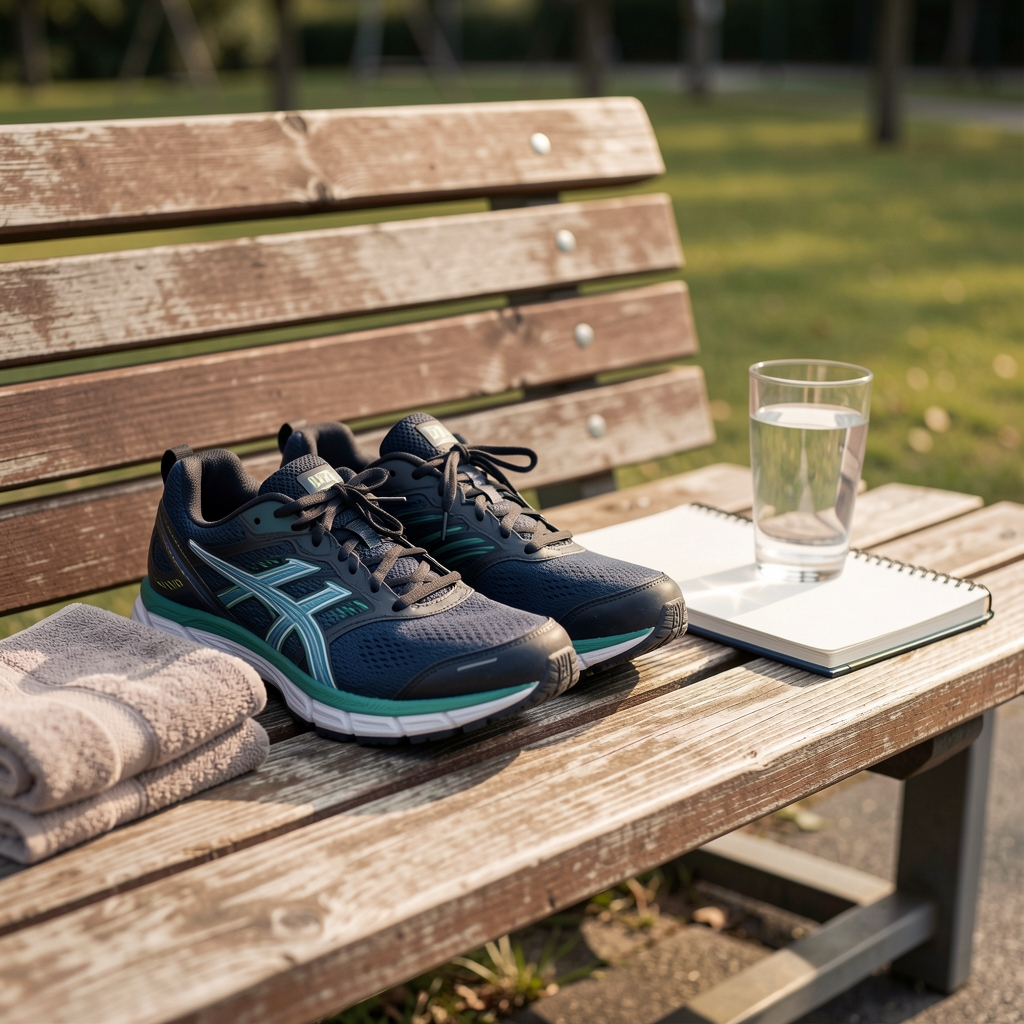
Recovery is often discussed as if it were a single switch. In practice, it includes the response during the next hour, the quality of sleep, the demands of work, the ease of everyday movement, and the willingness to begin again. These elements do not always move together. A person may feel mentally ready but physically heavy, or feel rested while a busy week continues to add demand.
Navlin encourages observation without moral language. A slower day is not a failure, and a busy day does not need to be solved through more effort. The useful question is what the current context permits. Sometimes the answer is a planned session; sometimes it is a shorter version, an easy walk, a mobility sequence, or rest.
Recovery is information about the relationship between the work and the life around it.
| Area | Observation | Possible planning question |
|---|---|---|
| Sleep | Duration, interruptions, usual rhythm | Would a lower-demand session fit today? |
| Daily workload | Standing, travel, stress, concentration | What demand already exists before training? |
| Movement | Ease of stairs, walking, and familiar tasks | Does technique feel familiar and controlled? |
| Mood and attention | Willingness, irritability, focus | Would a simple routine reduce decision load? |

Sleep records can help a reader notice timing, interruptions, travel, noise, or an inconsistent schedule. They cannot explain every feeling, and a wearable’s estimate should not be treated as a personal verdict. Use the information to ask whether the planned demand matches the day, not to create anxiety around one number.
Simple routines can lower friction: a consistent wind-down, a prepared morning route, fewer decisions before an early session, or a short note about the next day. These are practical experiments, not universal requirements. If sleep changes persist or create significant concern, discuss them with an appropriate professional rather than relying on an article.
A gentle walk or familiar mobility sequence can preserve a sense of routine when a full session does not fit. Keep the purpose clear and the effort manageable.
Regular meals and adequate fluids are part of ordinary recovery context. Individual needs vary with culture, workload, access, and personal circumstances.
Write down what changed, what helped, and what remains uncertain. A short note is often more useful than a detailed system that is hard to maintain.
For editorial questions, contact Navlin at Jalan Sudirman No. 18, Senayan, South Jakarta 12190, Indonesia, or +62 21 7123 8945.
Recovery conditions rarely remain constant. A person may sleep well but spend a day travelling, or have an easy workday followed by a demanding session. This is why a single readiness number is an incomplete description. Use several small observations and allow the plan to respond to the pattern rather than to one isolated morning.
Keeping recovery notes private can also reduce pressure. The purpose is to understand the relationship between training and ordinary life, not to create a public record that must look impressive. If a change persists, feels severe, or creates concern, bring a concise record to an appropriately qualified professional rather than attempting to solve the issue through more training content.