
Editorial Research Archive

Biomechanical Insights & Movement Analysis

Evidence-based articles exploring the intersection of daily posture ergonomics, walking cadence efficiency, and restorative physiology.

Individual maintaining balanced walking cadence on morning park route
Cadence Research Published September 2026

Biomechanical Efficiency in Daily Walking: The 100–118 Cadence Zone

Walking cadence, expressed as steps taken per minute, provides an objective barometer for aerobic work and musculoskeletal economy. Research indicates that maintaining a cadence between 100 and 118 strides per minute stimulates cardiovascular circulation while minimizing peak heel-strike impact on lower extremity joints.

Key Finding: Shorter, slightly quicker strides distribute ground contact force across the plantar fascia and calf complex more evenly than longer, overextended strides.

Incorporating three 15-minute cadence sessions during the day consistently yields superior aerobic adaptations compared to single, irregular high-effort bouts.

Ergonomic desk and workstation showing neutral spinal posture principles
Ergonomics Study Published August 2026

Workstation Geometry and Spinal Decompression Intervals

Prolonged seated computer work frequently produces forward head migration and lower back strain. By aligning monitor top edge precisely at eye level and positioning keyboard elbows at 90–100 degrees, spinal compression is significantly attenuated.

The 20:8:2 Rule: For every 30 minutes of office work: sit for 20 minutes with neutral spine, stand for 8 minutes, and perform 2 minutes of active thoracic extension and walking.

Small postural adjustments repeated throughout an 8-hour workday preserve intervertebral hydration and reduce end-of-day muscular stiffness.

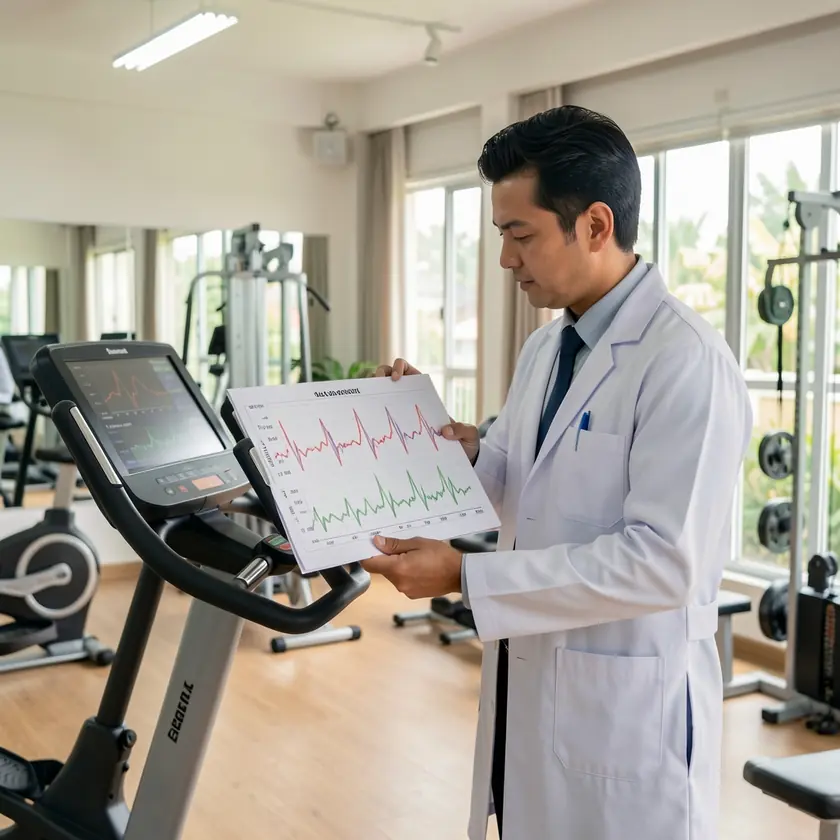
Laboratory setup examining aerobic pacing charts and cardiovascular exercise responses
Physiology Review Published July 2026

Calibrating Heart Rate Zones for Low-Impact Conditioning

Aerobic capacity is most resiliently established within Zone 2 intensities (roughly 60% to 70% of maximum heart rate). At this conversational pace, mitochondrial density expands while lactic acid accumulation remains negligible.

Conversational Marker: If you cannot complete a full sentence without pausing for breath, intensity has exceeded optimal aerobic base thresholds.

Brisk walking outdoors across moderate incline terrain offers an ideal vehicle for building base capacity without taxing the knees or lower spine.

Quiet bedroom setup optimized for circadian darkness and restful recovery
Rest Architecture Published June 2026

The Architecture of Active Rest and Circadian Recovery

Physical adaptation occurs during restful equilibrium rather than during active sessions. Cultivating consistent sleep onset times, keeping ambient room temperature between 17 and 19 degrees Celsius, and limiting evening blue light accelerates soft tissue repair.

Autonomic Shift: 10 minutes of slow 4-count nasal inhalation paired with 6-count exhalation measurably stimulates vagal tone before sleep.

Resting with purpose allows the body to maintain training consistency across decades rather than encountering cumulative fatigue.

Apply These Findings to Your Daily Schedule

Get your current posture and cadence evaluated against our baseline standards through the 4-step assessment.

Take Mobility Self-Assessment